Small Senior Care Homes: A Much Better Fit for Personalized Respite and Long-Term Care
Business Name: BeeHive Homes of Floydada TX
Address: 1230 S Ralls Hwy, Floydada, TX 79235
Phone: (806) 452-5883
BeeHive Homes of Floydada TX
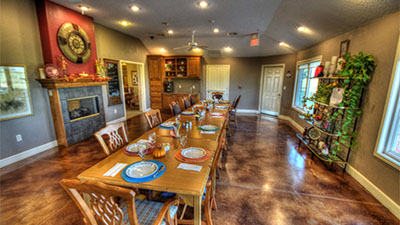
Beehive Homes assisted living care is ideal for those who value their independence but require help with some of the activities of daily living. Residents enjoy 24-hour support, private bedrooms with baths, medication monitoring, home-cooked meals, housekeeping and laundry services, social activities and outings, and daily physical and mental exercise opportunities. Beehive Homes memory care services accommodates the growing number of seniors affected by memory loss and dementia. Beehive Homes offers respite (short-term) care for your loved one should the need arise. Whether help is needed after a surgery or illness, for vacation coverage, or just a break from the routine, respite care provides you peace of mind for any length of stay.
1230 S Ralls Hwy, Floydada, TX 79235
Business Hours
When households begin looking at senior care, they typically visualize big assisted living communities, with long hallways, several dining rooms, and an events calendar that looks like a cruise liner schedule. Those settings work well for many older adults. Yet households typically inform me, after a few months, that something is missing out on: heat, continuity, or a sense that personnel really understand their parent as a person and not as "the fall threat in room 214."
That gap is where small senior care homes, likewise called residential care homes or board-and-care homes in many states, quietly excel. They are not as greatly promoted, and they hardly ever have marble lobbies, however they can provide precisely what most people state they want for their aging parents: real relationships, versatile assistance, and a living environment that seems like a normal home.
This matters both for long-lasting senior care and for short-term stays such as respite care, when a household caretaker needs a break, has surgical treatment, or faces a temporary crisis. The fit between an older grownup and the care environment throughout those durations can make the distinction between constant improvement and quick decline.
What follows reflects years of combined observation of households, citizens, and caregivers in both settings, big and small. No single design is universally much better, but the strengths of small homes are underused just because individuals do not know they exist or do not know how to evaluate them.
What is a small senior care home?
Most small senior care homes are exactly what they seem like: ordinary houses in residential neighborhoods, converted to provide 24/7 elderly care. Depending upon regional regulations, they generally serve in between 4 and 10 citizens. There is a kitchen where real cooking occurs, a living room with familiar furnishings, a yard or patio, and bed rooms that may be private or shared.
They usually fall under state licensing categories that might be named assisted living, residential care, individual care home, or something similar. The specific label differs by state, however functionally they being in the same general area as assisted living, not as knowledgeable nursing centers. They provide help with activities of daily living such as bathing, dressing, toileting, movement, and medication tips. The majority of do not offer intensive medical treatments that need a certified nurse around the clock.
A typical staffing pattern may be one caregiver for each three to 5 citizens during the day, and one awake caretaker at night for the whole home. The actual ratio varies, but it is typically far much better than the ratios in larger communities or nursing homes, where one aide might be appointed to 10, 15, or even more citizens per shift.
Because of the small size, regimens feel far more like domesticity. Breakfast does not require a trip to a big dining room. If somebody sleeps late, staff can adjust. If a resident hates oatmeal and enjoys eggs, that preference in fact sticks in staff's minds.
Why families start looking beyond big assisted living communities
Most families start their search with the huge names. They are visible, have marketing teams, and sponsor occasions. There is nothing incorrect with that. Many of those neighborhoods deliver safe, qualified senior care.
However, a number of patterns tend to drive households to consider smaller settings after they have actually already tried bigger assisted living facilities.
One circumstance involves cognitive decrease. A resident with early or moderate dementia moves into a big structure. The first weeks go well. Then the family notices their parent starting to separate, avoiding activities, or getting lost en route back to their room. Staff, stretched thin, can not constantly escort them, and other locals reoccur. The environment feels frustrating. In a small senior care home, that very same person may have just a handful of faces to keep in mind, and no long passages to navigate.
Another common trigger is irregular personnel. In larger centers, turnover is high. Families frequently grumble that the caregiver who comprehended their mother's morning routine unexpectedly disappears from the schedule, and the replacement does not understand how to coax her into the shower without a battle. In a home with six homeowners and a steady team of 3 or four caretakers, continuity is far easier to maintain.
There are likewise personality fits. Some older adults thrive in environments buzzing with activities, big group meals, and regular visitors. Others spent their entire lives in small homes and choose peaceful, predictable days. For them, a three-story structure with a hundred homeowners feels like an airport. A residential care home, tucked into an area, may match their sense of scale.
Why small homes can be ideal for respite care
Respite care is frequently a family's first test drive of formal elderly care. A partner or adult kid caregiver reaches a limitation, physically or mentally, and requires a break. Or they need to travel for work, or recover from their own surgery. The aging parent needs a safe, helpful place for one to six weeks.
Large assisted living facilities do supply respite care, normally utilizing provided "respite suites." The resident participates in routine activities and meals. This works best for relatively independent older grownups who delight in social interaction and can adapt quickly.
Small senior care homes, in my experience, shine when the care receiver is frail, distressed, or has moderate dementia. The shift into respite care is much shorter. The list of brand-new people to discover is restricted. There is normally no need to remember a brand-new layout. The gives off cooking and the sounds of a tv in the living-room feel familiar, not institutional.
Respite stays in small homes can likewise be more versatile. Households sometimes need only a vacation or a stretch of 9 or 10 days that does not conform to a standard monthly billing cycle. A small home, with an open room, might be willing to work out daily or weekly rates, specifically if they see prospective for a longer relationship later.
One of the most crucial, underrated benefits of utilizing a small home for respite care is what it exposes. Caretakers can see how their parent does when toileting pointers originated from another person, or when medication times are more stringent. They can observe how quickly their loved one kinds bonds with brand-new caretakers. If a future long-term move is likely, these short stays make it far less disruptive.
How individualized care really looks in a small home
The expression "individualized care" is overused in marketing, yet you can tell really quickly whether a setting lives up to it. In a small senior care home, personalization appears in small, particular ways that build up over time.
Breakfast is a fine example. In large assisted living facilities, breakfast hours may be 7 to 9 a.m. Citizens line up or are seated in shifts. Menus are set. If somebody comes to 9:10, the cooking area may already be cleaning up. In a small home, you typically see caregivers making toast at 9:45 because one resident constantly sleeps in, or reheating oatmeal because somebody decided they were hungry again.
Bathing and hygiene follow the very same pattern. Some citizens tolerate showers only in the afternoon, not very first thing in the morning when their joints are stiff. Others prefer a sponge bath most days and a full shower twice weekly. When personnel take care of six people instead of sixty, they can remember those patterns instead of requiring everyone into one routine.
Medication management also tends to be more versatile. While doses and times are prescribed, the method tips are provided can be tailored. One resident responds well to a gentle spoken hint, another likes her tablets presented with a specific drink. With fewer disruptions, caretakers can stick with someone who thinks twice or refuses medication, rather than leaving since they have twelve more residents to see before 10 a.m.
Even the emotional landscape is various. In small homes, caretakers see and react to mood shifts in real time. If a resident looks withdrawn, they can take a seat at the cooking area table and ask about it without stressing that other homeowners will be left ignored. That responsiveness is what often prevents small problems, such as mild dehydration or constipation, from intensifying into emergency clinic visits.
Comparing small homes and larger assisted living communities
Families often request a simple senior care beehivehomes.com verdict: which is much better, a small residential care home or a larger assisted living community? The honest answer is that it depends on the person and the scenario. That said, some differences appear consistently.
Here is a brief comparison that can help arrange your thinking:
- Environment: Small homes seem like real homes, with shared spaces that look like a family living room and cooking area. Big assisted living communities feel more like apartment buildings or hotels, with private apartment or condos and central dining.
- Social life: Big communities offer more structured activities, outings, and chances to fulfill many peers. Small homes offer fewer group events but more intimate, everyday social contact with the very same people.
- Staff interaction: In small homes, caregivers frequently know each resident deeply, however there are less professionals such as activity directors. In bigger settings, the group is bigger and more specialized, but private aides may turn regularly between residents.
- Cost structure: Big centers sometimes promote lower base rates, then include separate charges for higher care levels. Small homes frequently estimate a more inclusive month-to-month cost that bundles most care tasks into a single rate, though this varies.
- Medical intricacy: For locals with highly intricate medical requirements, a competent nursing facility might be more appropriate than either a small home or standard assisted living. Some larger neighborhoods have better access to on-site clinicians, while some small homes partner carefully with home health firms or visiting nurse services.
That list reflects common patterns. There are excellent large communities that feel warm and personal, and there are small homes that fail at the fundamentals. The point is to understand where each design tends to excel so that your tours and questions are more focused.
When a small home is specifically helpful
Certain scenarios tend to benefit disproportionately from the scale and intimacy of a small residential care home.
Older adults with mid-stage dementia frequently respond very well. Fewer individuals, less noise, and predictable regimens decrease confusion and agitation. When somebody begins to "sunset" in the late afternoon, staff can redirect them calmly, perhaps with a cup of tea at the cooking area table, instead of trying to manage escalating behaviors in a corridor full of activity.
People vulnerable to roaming are another group to consider. Numerous small homes have safe and secure yards or outdoor patios where residents can walk freely without leaving the property. Because there are just a couple of residents, staff notification if somebody heads toward the front door aimlessly. That direct observation can be more effective than electronic alarms in crowded hallways.
Frailer homeowners, who require aid with the majority of activities of daily living, tend to be a better fit as well. A caregiver who takes care of just three or four residents can pay for to transfer someone slowly, check that clothes is not twisted, and invest an additional minute getting someone comfy in their preferred chair. Those are the tiny pieces of self-respect that bigger settings battle to keep when personnel are outnumbered.
Short-term respite take care of individuals who are nervous, introverted, or quickly overwhelmed by sound is likewise smoother in a small home. I have seen quiet, reserved seniors decrease quickly throughout a two-week respite stay at a big, loud facility, then settle and regain hunger in a smaller setting where the total number of day-to-day interactions was manageable.
Trade-offs and limitations of small senior care homes
The strengths of small homes do not erase their restrictions. A practical view assists avoid disappointment later.
One trade-off involves range. Activities in small homes lean heavily on discussion, tv, simple games, light workout, and one-on-one engagement. There may not be day-to-day music performances, lecture series, or outings to dining establishments. For locals who are cognitively intact and delight in a full social calendar, a small home might feel constraining after the very first few weeks.
Another concern is staffing depth. When a caretaker employs sick at a large facility, there is normally a back-up pool. In a six-bed home, protection may involve the owner or manager actioning in. That can work magnificently if management is hands-on and committed. In weaker homes, staff tiredness can sneak in if there is no trustworthy substitute system.
Dietary range can likewise be restricted. Many small homes do a wonderful task with standard, home-style meals. Nevertheless, they hardly ever have the capability to produce custom-made menus for a number of different diets at the same time. If your parent follows a strict spiritual, medical, or personal diet that deviates considerably from standard choices, you require to ask detailed concerns and see how they handle it in practice.
Regulation and oversight differ by state. Some jurisdictions inspect small homes with the same rigor as big assisted living communities. Others use less structured oversight, which puts more obligation on families to vet the home thoroughly. Great small homes accept openness, invite concerns, and are happy to reveal documentation. If you feel you are being rushed, or your concerns rejected, deal with that as a serious warning sign.
Lastly, there is the emotional side. Households sometimes feel regret putting a parent in a setting that is familiar and intimate due to the fact that it does not look "expensive." They fret relatives will judge them for passing by the structure with the grand lobby. In practice, what older grownups appreciate daily is comfort, regard, and human contact, not design. It helps to keep that perspective clear when others start comparing brochures.
How to evaluate a small senior care home
Touring a small senior care home needs a somewhat various state of mind than exploring a big center. Instead of scanning facilities, you are assessing the quality of everyday life.
During the visit, pay close attention to the mood of the house. Not the marketing spiel, but the feeling in the space. Do citizens look clean, properly dressed, and at ease? Are personnel carefully engaged or glued to their phones? Does the television blare constantly, or does it seem to be on for a purpose?
Trust your nose. Strong smells, either of urine or heavy deodorizing chemicals, normally show care problems. A faint smell once in a while can occur in any setting, however consistent smells suggest systemic problems.
Listen to how staff speak to locals. Are they using names? Do they crouch or sit at eye level instead of calling from across the space? Small gestures here are very important. Customized assisted living and elderly care depend more on tone and method than on furnishings or clever technology.
It is usually handy to have a short, focused set of questions ready. For lots of families, these 5 cover the most essential ground:
- What is your typical staff-to-resident ratio throughout days, evenings, and nights?
- How do you deal with locals whose care needs increase over time?
- Can you explain a current scenario where a resident declined or had a medical occasion, and how your group responded?
- What kinds of respite care stays do you accept, and how do you shift someone from respite to long-lasting care if that becomes necessary?
- How do you keep families informed, specifically if they live out of town?
Ask to see the restroom setup, shower area, and at least one bedroom that is not specifically staged. If your parent uses a walker or wheelchair, examine whether entrances and hallways are useful, not just technically certified. Lots of small homes do a great task adapting, however some older houses have tight corners that make transfers harder.

If possible, visit a 2nd time at a various hour. A home that looks calm at 10 a.m. May be disorderly at 6 p.m. During shift changes and dinner preparation. Senior care is a 24-hour company. You are investing in how they deal with all of it, not just the peaceful parts.
Cost, contracts, and what to view for
Families frequently assume that small homes are immediately more affordable. That is not always the case. In numerous markets, a well-run residential care home expenses roughly the like mid-range assisted living, sometimes a little less, often a little more.
What varies is how rates is structured. Bigger neighborhoods typically estimate a low "base rate" that covers real estate, meals, and light support, then include tiered costs for greater levels of care: help with bathing, regular transfers, specialized dementia care, oxygen management, and so on. The final costs can wind up much higher than the initial quote once a resident requirements substantial assistance.
Small homes more often utilize a bundled design, where a single regular monthly fee covers all basic individual care tasks, with different charges just for really intricate needs. This is not universal, but it is common. That predictability assists households prepare better, particularly for long-term stays.
Regardless of the design, checked out the contract carefully. Search for:
Clauses about rate increases. Numerous companies reserve the right to raise rates yearly or when care needs rise. Ask how frequently they do so in practice and by what typical percentage.
Discharge requirements. Understand what happens if your parent's condition changes. At what point would they need a greater level of care, such as a nursing home? Who makes that choice, and how much notice are you given?
Respite care terms. If you are using respite care first, check minimum stay lengths, deposits, and whether any part is credited if you shift to long-term occupancy.
Refund policies. Life situations alter quickly. Make sure you understand just how much notification you should provide to avoid extra charges when moving out.
Most households undervalue the length of time they may need assistance. Assuming 2 to five years of assisted living or residential care is more reasonable than assuming a few months. Matching the expense structure and contract versatility to that horizon is as essential as evaluating the curb appeal.
Who is not a good suitable for a small care home?
While I have seen many older adults prosper in small homes, some are inadequately served by this model.
Highly social, active senior citizens with great cognition who still drive, handle their own medications, and choose independent living typically discover small homes too confining. They might be better off in a big community that uses improved social life and more autonomy, or in senior homes with a la carte services.
Individuals needing complex treatment provided by licensed nurses all the time generally belong in experienced nursing or a customized medical setting. A small home can work in cooperation with home health or hospice in a lot of cases, but it is not an alternative to a hospital step-down unit.
There can likewise be character mismatches. A resident who is consistently loud, aggressive, or disruptive can overwhelm a small neighborhood of 5 or six people. Great homes screen carefully and are honest about whether they can keep a safe and calm environment for everyone present.
Finally, some households worth eminence, on-site facilities, or brand reputation above intimate care relationships. They might feel more at ease dealing with business structures and nationwide policies. For them, a big assisted living chain may feel more predictable, even if the everyday experience is less personal.
Starting the conversation with your family
Shifting a parent from home to any form of assisted living or elderly care includes grief, guilt, and, often, difference among brother or sisters. Bringing a small senior care home into the discussion can actually reduce some tension by reframing what "placement" looks like.
Instead of saying, "We are moving Mom to a center," you can say, "We found a home with six locals, where she will have her own space and somebody to help her at night. Let us try a brief respite care stay and see how she feels." That softer framing matches the reality of the environment.
If you are the main caretaker, prepare particular examples of where you are having a hard time: lifting, night-time wandering, medication timing, your own health declining. Compare those requirements with what the small home can realistically offer. Families tend to respond better to concrete details than to basic declarations such as "I am exhausted."
When going to prospective homes, if possible, include your parent at least once, unless their cognitive status makes that detrimental. Take note of their body language. Lots of older grownups warm quickly to small homes since the scale reminds them of familiar life stages.
The enduring concern is always whether a setting uses safety without stripping away personhood. Small senior care homes, when they are well run, hold that balance especially well. They are not the ideal answer for everyone, yet they are worthy of a location at the top of the list for families looking for deeply personalized respite care and long-lasting assistance in a setting that feels less like a system and more like a home.
BeeHive Homes of Floydada TX provides assisted living care
BeeHive Homes of Floydada TX provides memory care services
BeeHive Homes of Floydada TX provides respite care services
BeeHive Homes of Floydada TX supports assistance with bathing and grooming
BeeHive Homes of Floydada TX offers private bedrooms with private bathrooms
BeeHive Homes of Floydada TX provides medication monitoring and documentation
BeeHive Homes of Floydada TX serves dietitian-approved meals
BeeHive Homes of Floydada TX provides housekeeping services
BeeHive Homes of Floydada TX provides laundry services
BeeHive Homes of Floydada TX offers community dining and social engagement activities
BeeHive Homes of Floydada TX features life enrichment activities
BeeHive Homes of Floydada TX supports personal care assistance during meals and daily routines
BeeHive Homes of Floydada TX promotes frequent physical and mental exercise opportunities
BeeHive Homes of Floydada TX provides a home-like residential environment
BeeHive Homes of Floydada TX creates customized care plans as residents’ needs change
BeeHive Homes of Floydada TX assesses individual resident care needs
BeeHive Homes of Floydada TX accepts private pay and long-term care insurance
BeeHive Homes of Floydada TX assists qualified veterans with Aid and Attendance benefits
BeeHive Homes of Floydada TX encourages meaningful resident-to-staff relationships
BeeHive Homes of Floydada TX delivers compassionate, attentive senior care focused on dignity and comfort
BeeHive Homes of Floydada TX has a phone number of (806) 452-5883
BeeHive Homes of Floydada TX has an address of 1230 S Ralls Hwy, Floydada, TX 79235
BeeHive Homes of Floydada TX has a website https://beehivehomes.com/locations/floydada/
BeeHive Homes of Floydada TX has Google Maps listing https://maps.app.goo.gl/VQckTu3ewiBFL32A7
BeeHive Homes of Floydada TX has Facebook page https://www.facebook.com/BeeHiveHomesFloydada
BeeHive Homes of Floydada TX has an Youtube page https://www.youtube.com/@WelcomeHomeBeeHiveHomes
BeeHive Homes of Floydada TX won Top Assisted Living Homes 2025
BeeHive Homes of Floydada TX earned Best Customer Service Award 2024
BeeHive Homes of Floydada TX placed 1st for Senior Living Communities 2025
People Also Ask about BeeHive Homes of Floydada TX
What is BeeHive Homes of Floydada TX Living monthly room rate?
The rate depends on the level of care that is needed. We do an initial evaluation for each potential resident to determine the level of care needed. The monthly rate is based on this evaluation. There are no hidden costs or fees
Can residents stay in BeeHive Homes until the end of their life?
Usually yes. There are exceptions, such as when there are safety issues with the resident, or they need 24 hour skilled nursing services
Do we have a nurse on staff?
No, but each BeeHive Home has a consulting Nurse available 24 – 7. if nursing services are needed, a doctor can order home health to come into the home
What are BeeHive Homes’ visiting hours?
Visiting hours are adjusted to accommodate the families and the resident’s needs… just not too early or too late
Do we have couple’s rooms available?
Yes, each home has rooms designed to accommodate couples. Please ask about the availability of these rooms
Where is BeeHive Homes of Floydada TX located?
BeeHive Homes of Floydada TX is conveniently located at 1230 S Ralls Hwy, Floydada, TX 79235. You can easily find directions on Google Maps or call at (806) 452-5883 Monday through Sunday 9:00am to 5:00pm
How can I contact BeeHive Homes of Floydada TX?
You can contact BeeHive Homes of Floydada TX by phone at: (806) 452-5883, visit their website at https://beehivehomes.com/locations/floydada/,or connect on social media via Facebook or Youtube
Visiting the Floyd County Historical Museum offers educational displays and views that make for a light cultural stop during assisted living, senior care, and respite care visits.